sábado, 13 de abril de 2013

Forrest Gump


Movie Report

Forrest Gump is a movie that tells us about so much history about the USA and how a person influenced in those events of history (is a movie, so it is not true).
Forrest Gump is a boy who had a problem with his legs and he used a type of orthopedic equipment so he can walk. With this orthopedic equipment he taught a dance passage to a musician (Elvis Presley), and Forrest tells that later that musician was known as “The king”. After time he didn’t needed more those equipment and he could walk and run normally.

He played football with the University of Alabama because he noticed he could run so fast, he became part of the All-America of football and met the president John F. Kennedy. When he grew up he list in the USA army, there is where he met Bubba, who became his best friend in that time. He went to Vietnam because it that time USA and Vietnam had troubles and there was a war. Over there Forrest helped all his colleagues to survive but when he found Bubba he was in a bad status and died over there. After he returned to USA and he was awarded with a medal of honor because of being in war and survived. He formed part of a Hippie movement in that years, but he didn’t have idea of what it was. After his services for the army he join the ping pong team of USA and went to the Olympic Games in Asia. After winning the gold medal he came back and again visited the white house and met Richard Nixon.

He also appeared in a TV show together with John Lennon. With the money of playing ping pong he dedicated his life to the shrimping with his ex Lieutenant Dan of the USA Army, at the beginning they were failing with their mission but after a hurricane they were alone in the competition of shrimping. Both of them became rich and invest part of their money in a company of technology named Apple.

In the final of the story, Forrest marries Jenny because he discovers that they had a son, but later Jenny dies of a strange type of virus and Forrest takes care of his son for the rest of his life. The story ends when Forrest send his child to school and sits down in the same trunk as his mother sat when sent Forrest to school.

In summary this movie tells us the life of a common person but with some psicological problems and how he formed part of the history of his country. He formed part of wars, politics, movements, sport events, actual worldwide companies and social events.

lunes, 1 de abril de 2013

Wartime letter

Wartime letter

Dear Mom & Dad:

Here I am in the middle of the war. I have seen my colleagues die in war, it's terrible to see how they fall to the ground and don't respond to my screams. 

Also I have 2 terrible notices,  I lost one arm in battle i was hit by an enemy gun and doctors needed to amputate it, but don't worry I'm totally fine. The other one is that my brother is in vegetal state because he received a bullet in his brain protecting me. I hope hi gets better in the future but the doctors say that he won't.

Hope to see both of you soon in home.I will come back to home in 2 months.

Your son, Alejandro

domingo, 17 de marzo de 2013

Modernism and Upstairs & Downstairs

Modernism Arts


Modernism was a movement in which happened during the 19th and 20th century. In this blog I will show you some pieces of art from this movement and talk about a chapter from the serie "Upstairs Downstairs".


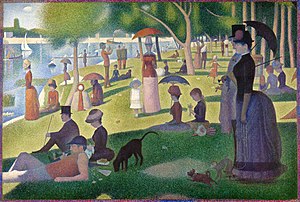
This is a oil on canvas piece of art from the modernism. Was made by Georges-Pierre Seurat in the years between 1884 and 1886. This painting shows the landscape of a common day on the island "La Grande Jatte" in Paris.


This video was created in 1928 and published in 1929 by Anton Webern. It has the style of the early 20th century. It starts with a low tone until the half of the piece; then it turns stronger and then again low.


William Carlos Williams (1883-1963) United States
“This Is Just to Say”

I have eaten
the plums
that were in
the icebox

and which
you were probably
saving
for breakfast

Forgive me
they were delicious
so sweet
and so cold


I don't like at all poems, but in my opinion this one shows a way to apologise because of the actions a person did and also because the author found the way to express it on a poem, that's why i share it with you.


Upstairs, Downstairs


"Upstairs, Downstairs" is a British television serie based in the years between 1903 and 1930, and it  is about a high class family, the Bellamys, who lived in London, who live upstairs, and the servants of this family, who live downstairs. The serie show us a lot of things about how was life in Britain , specially the social and technological changes from then to now. 


the episode i watch of this serie, The King Edward XII went to dinner at their house. Sarah the exmaid because she got pregnant(the father was James). Unfortunately the baby wasn't able to born and died, so Sarah got back downstairs and serve the family. King Edward XII governed  from 1901 to 1910. He was the son of the Queen Victoria. His wife was Alexandra, but she just got married for politics interest.

  • The servants don't go usually upstairs, just when they are required for and they are well treated.
  • Manchester United is a football club from England and existed since those times.
  • Houses in those years were so old but beautiful.


martes, 26 de febrero de 2013

THE BRITISH EMPIRE


The British Empire


The Clapham Sect

  • A group of reformers from London and the request was accepted by the Parliament in 1807
  • They wanted to Christianize India
  • Indians didn’t let the Clapham Sect christianize them.


David Livingstone


  • Scotish explorer and missionary
  • He was in the anti-salvery movement and wanted to start a commerce in Africa
  • He spent several years exploring Africa
  • He also wanted to spread the Christianity in Africa


British experiences in Africa and India


Africa:

  • Accepted easily the Christianity religion
  • Didn’t do a rebellion against Britain
  • Became the British slaves


India:

  • Rejected the Christianity religion
  • After two years British got into India they started a rebellion
  • Didn’t let the British make them their slaves

The Sepoy Mutiny


  • Indians rejected Christianity
  • The mutiny was used beacause the process of Christianize was succeding too slow
  • This cause a war between India and British, but the Indians died in a cruel way, as prisioners and being executed
  • A lot of British and Indians died in the battle 


Henry Morton Stanley

  • American explorer and journalist
  • He wanted to conquer Africa
  • He found Livingstone in a village of Africa named: Tangayika


LINK TO THE VIDEO


martes, 12 de febrero de 2013

The Gentlewoman and the Robber Baron


The Gentlewoman and the Robber Baron


1.      What were the two most popular magazines in America in 1902?
McClure’s and Munsey’s

2.      Who was Mark Twain? How did he become involved in Ida Tarbell’s investigation of Standard Oil?
An American author of some famous novels and he was asked to investigate what McClure was planning to publish.

3.      Why did Ida Tarbell pray not to get married?
Because she wanted to be free and was with the ideas that men were cruel and they mistreated women during relationships.

4.      Who were the suffragettes? How did they influence Ida?
Suffragettes were participants of the revolution fighting for the right of vote to women. They influenced Ida with ideas of freedom and about the male cruelty to women.

5.      What was the most important thing in John Rockefeller’s life?
His commercial career.

6.      What is a rebate?
A partial refund following a purchase.

7.      How did the railways give preferential treatment to Standard Oil?
It was more valuable and easier to produce in that time.

8.      What is the difference between crude oil and refined oil?
Crude oil is natural petroleum, in the other hand refined oil went through a process of molecule separation, making this type of oil more valuable and efficient.

9.      Did Standard Oil practice horizontal integration, vertical integration, or both?
Both, because they controlled 90% of the entire oil industry, transporting and marketing, that’s why they could charge it in any price they wanted.


10.  Ida Tarbell summarized Rockefeller’s goal: Controlling all refineries, I shall be the only shipper of oil. Being the only shipper, I can obtain special rates of transportation which will drive out and keep out competitors; controlling all refineries, I shall be the only buyer, and can regulate the price of crude [oil] as I can the price of refined. If Rockefeller controlled the entire market for oil, what would he have?
A monopoly.

11.  What did Ida Tarbell have to say about “The Legitimate Greatness of Standard Oil”? That the leader’s business has become succeed and the company was in a perfect status. Although it was an amazing organization, she feared the start of an unstoppable monopoly.

12.  What percentage of the nation’s oil business did Rockefeller control by 1879?
90%

13.  What are muckrakers?
They are journalists that exposed the corruption of politicians and the abuses to the society.

14.  What law did the U.S. Government use to sue Standard Oil?
Antitrust suits             

15.  What did the U.S. Supreme Court eventually decide in that lawsuit?
Various fines. The company was temporary banned. Finally, they were prohibited to trade for unfair prices.

16.  What did Rockefeller’s son John Rockefeller, Jr., do with his money?
He gave it away

17.  What happened when John Rockefeller, Jr., and Ida Tarbell met at a conference?
Rockefeller acted natural, and after that he went to a formal dinner with Ida.


Economics Definitions 

Laissez-faire capitalism: Economic system in which people want the government not to interfere in their negotiations and company managing.

Free market: Business governed by the laws of supply and demand, without government interference. 

Law of supply and demand: It states that if the more supplies there are and the less demand for them is, the price will be lower. 

Law of self-interest: States that people who help the interests of other people will finish beneficiating themselves.

Law of competition: It maintains the marketing in order by regulating the competitive actions between companies.

The invisible hand: Natural force that guides each free market group or company to the most beneficial actions.

Contract: Agreement between 2 or more persons or organizations 

Free trade: Interchange of goods

Balance of trade: The difference between investment and the earnings

Zero-sum game: A company gains the same what another company losses

Protectionism: To not allow any interaction of other countries in the commerce

Embargo: prohibition against the commerce of certain products to a particular country for economic or political reasons.

Quota: The limit of price of imported supplies

Tariff: Taxes on certain goods

Comparative advantage: Low the prices of goods, gain demand and beat the competition

Trading partner: Company that agrees to interchange supplies or information with another  one

Niche product: Special product, which is only sold in a certain market

Specialization: When a company focuses in a certain commerce area 

Life expectancy: The expectation of how many years people will live in a region

Birth rate: Difference between how many people born and die in a day

Replacement rate: The percentage of working income that an individual needs to maintain the same standard of living in retirement

Carrying capacity: Maximum fitting load

Utilitarianism: An ethical philosophy in which the happiness of the greatest number of people in the society is considered the greatest good.